
15 March 2026: Fourth Sunday in Lent Year A (Lent 4 A)
Lectionary Texts: 1 Samuel 16:1-13; Psalm 23; Ephesians 5:8-14; John 9:1-41
Below, you will find a story and a shorter version (less than 300 words) that could be used as a newsletter reflection. Some sermon topics and ideas based on the Sunday lectionary readings are also included.
The story will be based on one of the topics, which will be identified. My sermon topic will be identified as one or a combination of the listed topics.
The Whisper of Dar al-Nur (House of Light)
(short version)
Based on John 9:13-34 – Religious leaders question the healing and investigate what has happened.
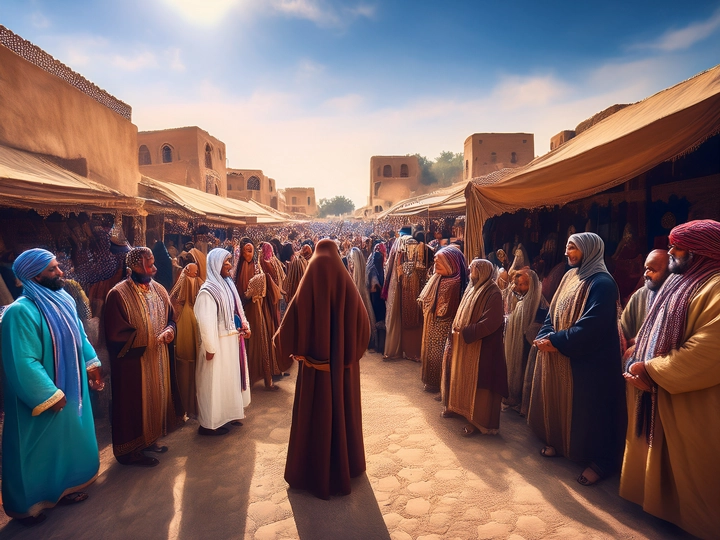
Lanterns flickered along Suq al-Sahra as the crowd pressed closer to the steps of the gathering hall. A hush fell when the healer appeared, his hands raised, the light catching the embroidery of his robe. Whispers ran through the marketplace: “The blind see.” “The fever disappears.” Some scoffed. Others bowed their heads.
Two figures pushed through the throng, moving silently toward the hall. One carried a leather-bound notebook, its pages already filled with scribbled testimonies; the other balanced a satchel of letters from distant towns, each sealed with wax and ink. Both had been sent to observe, to report. Neither spoke, but every gaze tracked the healer, noting the crowd’s reactions—the sudden gasps, the quiet prayers, the faint tremor in those who clutched coins to their chests.
A shout erupted from the back alley: a man stumbled forward, claiming the healer had taken his child and restored her voice. The crowd surged. Lanterns swung. A table overturned. In the chaos, the two observers glimpsed a shadow slipping between stalls—a traveller whose robes seemed too fine for the marketplace, whose eyes darted with keen calculation. The healer paused, meeting the stranger’s gaze, and for a heartbeat, the entire hall fell silent. Then the man moved on, vanishing through Bab al-Jami.
The crowd quieted again, but the investigators exchanged a look. Something had shifted. They could not say whether the shadowed traveller was an ally, a deceiver, or something else entirely. And as the healer began to chant, voices rising in a strange harmony, a small tremor ran through the gathered faithful—and one of the observers felt a sudden, unshakable certainty: this night would end with questions no one could answer.
The Whisper of Dar al-Nur (House of Light)
Based on John 9:13-34 – Religious leaders question the healing and investigate what has happened.
Lanterns flickered along Suq al-Sahra as the crowd pressed closer to the steps of the gathering hall. A hush fell when the healer appeared, his hands raised, the light catching the embroidery of his robe. Whispers ran through the marketplace: “The blind see.” “The fever disappears.” Some scoffed. Others bowed their heads.
Two figures pushed through the throng, moving silently toward the hall. One carried a leather-bound notebook, its pages already filled with scribbled testimonies; the other balanced a satchel of letters from distant towns, each sealed with wax and ink. Both had been sent to observe, to report. Neither spoke, but every gaze tracked the healer, noting the crowd’s reactions—the sudden gasps, the quiet prayers, the faint tremor in those who clutched coins to their chests.
A shout erupted from the back alley: a man stumbled forward, claiming the healer had taken his child and restored her voice. The crowd surged. Lanterns swung. A table overturned. In the chaos, the two observers glimpsed a shadow slipping between stalls—a traveller whose robes seemed too fine for the marketplace, whose eyes darted with keen calculation. The healer paused, meeting the stranger’s gaze, and for a heartbeat, the entire hall fell silent. Then the man moved on, vanishing through Bab al-Jami.
The crowd quieted again, but the investigators exchanged a look. Something had shifted. They could not say whether the shadowed traveller was an ally, a deceiver, or something else entirely. And as the healer began to chant, voices rising in a strange harmony, a small tremor ran through the gathered faithful—and one of the observers felt a sudden, unshakable certainty: this night would end with questions no one could answer.
Over the following days, the town of Dar al-Nur buzzed with rumours. The healer travelled from home to home, restoring sight, speech, and hope. Letters arrived daily, carried by scribes from Qasr al-Madinah and beyond, recounting miracles in distant villages. Some townsfolk claimed they had seen the impossible with their own eyes; others swore that trickery was afoot. The investigators recorded every account, every discrepancy, every odd detail: a word changed here, a gesture repeated there.
The shadowed traveller appeared intermittently, offering counsel to the healer and subtly redirecting how the miracles were explained. Elders whispered their doubts, scribes copied conflicting testimonies, and the investigators began to notice the patterns—but each lead dissolved before it could be confirmed. Sometimes, the town seemed to shimmer with undeniable wonder. Other times, the inconsistencies gnawed at the mind, and the investigators feared they were seeing deception where none existed.
They interviewed families whose children had been healed. Some recovered entirely; others fell ill again after a few days. The healer spoke with authority and charm, but his words often contradicted themselves. Rumours of gifts exchanged, coins offered, and favours granted reached their ears. Even among the faithful, suspicion crept quietly like a shadow along the alleys.
Letters continued to circulate. The shadowed traveller’s influence became more apparent: stories emphasised certain events, omitted others, and slowly the town’s collective understanding of the miracles shifted. The investigators debated whether the traveller was a guide, a manipulator, or simply a witness whose presence reframed the whole community. Their notebooks filled, but the truth remained elusive.
Weeks passed, and the town gathered once more in the central hall. Lanterns glimmered across the stone floor, children clutched their mothers’ robes, and merchants leaned from balconies. The healer raised his hands again, chanting, a calm authority rippling through the crowd. The investigators pressed closer, searching for the smallest sign: a flicker of deceit, a hint of trickery, a trace of genuine wonder.
Nothing.
When the chanting ended, the crowd dispersed quietly, leaving the investigators standing amid empty stalls and overturned benches. They exchanged weary glances. Every detail was recorded. Every contradiction noted. Yet the answer remained beyond reach. Was the healer a miracle worker, a charlatan, or something that defied simple classification? The shadowed traveller had disappeared, leaving no trace but a few altered letters and a lingering sense of unease.
The investigators left Dar al-Nur that evening, walking the narrow streets toward the town gates. Lantern light danced across the walls, reflecting off mosaic tiles, and the murmurs of the marketplace rose again with evening trade. Each step carried the weight of unresolved questions. Behind them, the town slumbered—or perhaps it did not. The miracles continued, the letters circulated, the townsfolk whispered, and the shadow of doubt lingered over every story.
Some truths, they realised, could not be proven. And some miracles, whether real or imagined, would leave their mark on the town forever, even if no one could name it.
Sermon Topics and Ideas
- God’s Hiring Practices Are Suspicious
- 1 Samuel 16:1-13 – Samuel is sent to anoint a new king. God rejects the obvious candidates and chooses the overlooked shepherd boy, David.
- The scandal of divine selection: the most impressive people in the room are passed over.
- The difference between human systems of merit and divine vision.
- The discomfort of being overlooked; the equally unsettling reality of being unexpectedly chosen.
- Communities often build hierarchies that reward appearance, competence, and confidence. God repeatedly disrupts those hierarchies.
- The possibility that God’s future is already tending sheep somewhere outside the meeting room.
- The King Who Was Really a Worship Leader
- 1 Samuel 16:1-13 – God looks at the heart when choosing David, the youngest and least expected son of Jesse.
- Israel asked for a king to secure political strength and stability.
- David’s lasting legacy in Scripture is not conquest but poetry, prayer, and worship.
- The possibility that God recognised in David a heart capable of shaping the worship life of the people.
- The tension between the role people expect and the gift God actually sees.
- The irony that the king remembered most deeply by Israel may be the one who wrote its songs rather than the one who ruled best.
- The Psalm That Makes Us Sheep
- Psalm 23 – The Lord is described as a shepherd who guides, restores, and protects through danger.
- Modern resistance to the metaphor: sheep are not admired animals.
- The psalm comforts by assuming vulnerability and dependence.
- Security comes not from strength but from belonging to the shepherd.
- The unsettling suggestion that guidance sometimes requires surrendering control.
- The valley is not avoided; it is walked through with accompaniment.
- What If the Shepherd Had Goats?
- Psalm 23 – A shepherd provides care, guidance, and protection for the animals under care.
- The psalm assumes we are sheep, the classic symbol of vulnerability and dependence.
- Goats in Scripture often symbolise stubbornness, independence, and resistance.
- Asking whether people sometimes behave more like goats than sheep.
- The possibility that divine care extends even to creatures that resist guidance.
- The comfort and challenge of belonging to a shepherd, even when we do not act like ideal sheep.
- Wake Up, You Sleepy Saints
- Ephesians 5:8-14 – The community is urged to live as children of light, exposing what belongs to darkness.
- Darkness is not simply moral failure but social systems that quietly normalise injustice.
- Light exposes; exposure is uncomfortable and often resisted.
- The tension between private faith and public visibility.
- Waking up implies that many believers are spiritually asleep, yet assuming they are awake.
- The risk of living transparently in a culture comfortable with shadows.
- The Dangerous Work of Turning on the Light
- Ephesians 5:11 – The community is urged to expose the works of darkness rather than participate in them.
- Exposing wrongdoing can come with serious consequences.
- Truth-telling often threatens systems that benefit from secrecy.
- The tension between courage and wisdom when confronting injustice.
- Discernment about when to speak publicly and when to protect oneself or others.
- The role of the community in supporting those who take the risk of bringing hidden things into the light.
- Who Is Really Blind?
- John 9:1-41 – Jesus heals a man born blind, leading to conflict with religious authorities who refuse to see what has happened.
- Physical sight is restored, but the deeper story is about spiritual blindness.
- The man gradually sees more clearly while the experts become increasingly certain and increasingly blind.
- Systems that prefer theological explanations over transformed lives.
- The irony that certainty can prevent vision.
- The possibility that the most faithful response to God may be admitting that sight is still forming.
- When Scepticism Looks Like Faithfulness †
- John 9:13-34 – Religious leaders question the healing and investigate what has happened.
- Communities of faith sometimes need to guard against deception and exploitation.
- The uncomfortable reality that many who claim miraculous healing exploit vulnerable people.
- From the leaders’ perspective, questioning may have seemed responsible rather than hostile.
- The tension between healthy scepticism and spiritual blindness.
- Discernment about when questioning protects the vulnerable and when it prevents the recognition of genuine transformation.
The topics with a purple background are related to Domestic Violence.
† The story above is based on this topic.
‡ My sermon will be based on these Topics/ideas
Other Lectionary Resources
These resources are based on the lectionary readings.
- A Sermon for every Sunday – FREE lectionary-based video sermons by America’s best preachers for use in worship, Bible study, small groups, Sunday school classes, or for individual use. All you do is push the button.
- Laughing Bird – a gift to the wider Church from the South Yarra Community Baptist Church in Melbourne, Australia. Has several sermons, prayers and the lectionary bible readings.
- The Lutheran Church of Australia – A worship planning resource that includes many parts of the service, including song selections, sermons, visual arts, children’s resources, and others.
- Lectionary Liturgies – A full liturgy for each Sunday based on the lectionary readings for the week. These are liturgies that I prepare for the congregation I serve and make available to others.
)